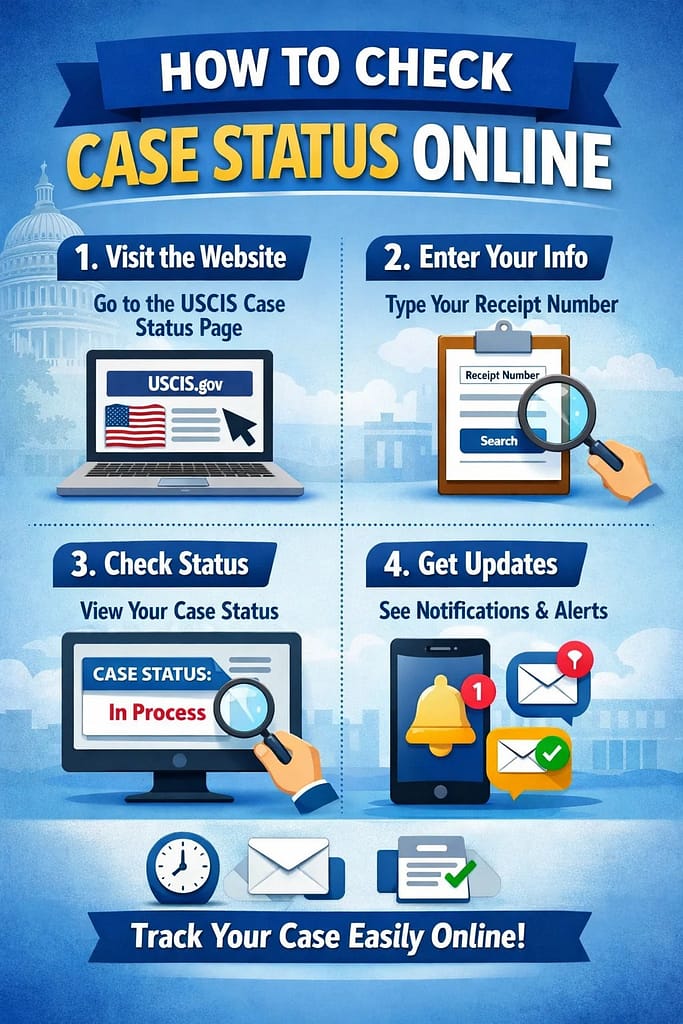



A simple guide for checking court case status online using official judicial portals.
- Introduction
- Platforms for Checking Case Status
- Method 1: Checking Case Status through eCourts Services Portal
- Step 1: Visit the Official Website
- Step 2: Click on “Case Status”
- Step 3: Choose the Search Method
- Step 4: Enter Required Details
- Step 5: Enter Captcha and Submit
- Step 6: View Case Information
- Method 2: Checking Case Status on High Court Websites
- Method 3: Checking Case Status through the eCourts Mobile App
- Information Available in Online Case Status
- Important Points to Remember
- Practical Tips for Law Students and Interns
Introduction
With the digitization of the judicial system in India, courts now provide online platforms that allow individuals to check the status of their cases. This system enables litigants, advocates, and law students to track hearings, orders, and case progress without physically visiting the court.
Online case status portals help maintain transparency and provide quick access to important information related to ongoing and disposed cases.
Platforms for Checking Case Status
In India, case status can be checked through several official judicial portals. The most commonly used platforms include:
- eCourts Services Portal
- High Court Websites
- Supreme Court of India Website
- eCourts Mobile Application
The eCourts portal covers District Courts and many subordinate courts across the country.
Also Read: How to Prepare a Memo of Appearance
Method 1: Checking Case Status through eCourts Services Portal
The eCourts Services Portal is the primary platform for checking case status in district and subordinate courts.
Step 1: Visit the Official Website
Go to the eCourts Services portal.
Step 2: Click on “Case Status”
Select the “Case Status” option available on the homepage.
Step 3: Choose the Search Method
You can search case details through different methods such as:
- Case Number
- Party Name
- Advocate Name
- Filing Number
- FIR Number
- Case Type
Step 4: Enter Required Details
Fill in the relevant details such as:
- State
- District
- Court Complex
- Case Type
- Case Number
- Year
Step 5: Enter Captcha and Submit
After entering the required details, submit the information to view the case status.
Step 6: View Case Information
The system will display the case details including:
- Case stage
- Next hearing date
- Case history
- Orders and judgments
- Parties and advocates involved

Method 2: Checking Case Status on High Court Websites
Each High Court in India maintains its own official website where case status can be checked.
The general process includes:
- Visiting the official website of the relevant High Court.
- Navigating to the “Case Status” or “Case Information” section.
- Entering case details such as case number, party name, or advocate name.
- Submitting the details to access case information.
High Court websites often provide additional features such as order downloads and cause lists.
Method 3: Checking Case Status through the eCourts Mobile App
The judiciary also provides a mobile application called the eCourts Services App.
This app allows users to:
- Track case status
- View hearing dates
- Check orders and judgments
- Access cause lists
- Receive updates on case progress
The mobile application is available for both Android and iOS devices.
Information Available in Online Case Status
When you check the status of a case online, the portal generally provides the following information:
- Case number and type
- Names of parties
- Names of advocates
- Court details
- Stage of the case
- Previous hearing dates
- Next hearing date
- Orders and judgments
This information helps litigants and lawyers stay updated about the progress of the case.
Important Points to Remember
While checking case status online, the following points should be kept in mind:
- Ensure that the case number and year are entered correctly.
- Select the correct court and case type.
- Some updates may take time to appear on the portal.
- Always rely on official judicial websites.
Online case status is meant for informational purposes and should be verified through official court records when necessary.
Practical Tips for Law Students and Interns
Law students and interns should regularly use online case status portals to monitor cases they are working on during internships or moot court research.
Understanding how to track case status online also helps in:
- Preparing for hearings
- Monitoring procedural developments
- Accessing orders and judgments for research
Familiarity with these platforms is an essential practical skill for anyone pursuing litigation.